
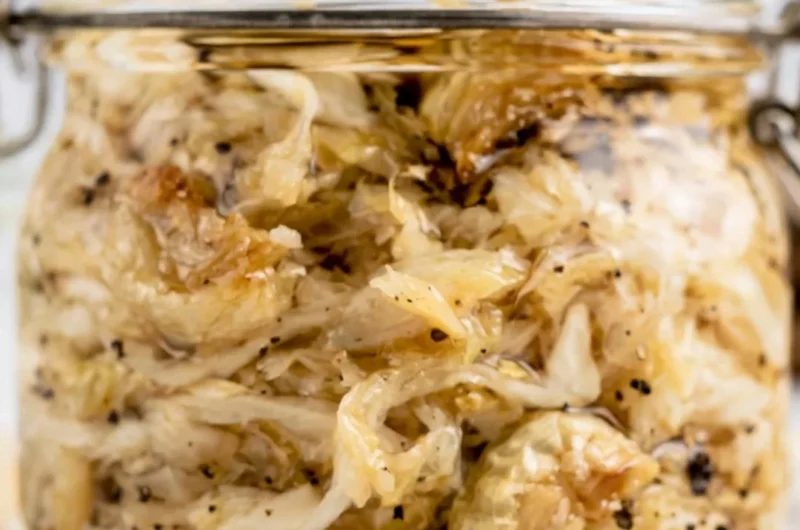
Roasted Garlic Sauerkraut Recipe: Comfort in a Jar
There’s something undeniably cozy about the process of making fermented foods at home. The gentle bubbling, the delightful aroma wafting through your kitchen, and the knowledge that you’re creating something nutritious and delicious just fills the soul. Growing up, my grandmother would often coat the dinner table with jars of pickled veggies, and I can still remember the tangy aroma blending with the savory dishes we savored. This Roasted Garlic Sauerkraut recipe brings back those cherished memories, transforming everyday cabbage into a creamy, zesty delight that packs a nutritional punch. If you’re searching for easy homemade fermented goodness to accompany your weeknight dinners or weekend gatherings, this is one you’ll definitely want to pin for later!
Why You’ll Love This Recipe
- Health benefits: Packed with probiotics for gut health, making it an excellent addition to your diet.
- Unique flavor: The roasted garlic adds a rich, sweet depth to the tangy sauerkraut that will tantalize your taste buds.
- Perfect for meals: It’s a fantastic topping for sandwiches or a crunchy side for a cozy dinner.
- Easy to make: With just a few ingredients and a little patience, you’ll have homemade goodness in no time.
- Customizable: Feel free to experiment with different spices and flavors to make it your own!
Gather These Simple Ingredients
To get started on your Roasted Garlic Sauerkraut, you will need the following ingredients:
- 500 grams cabbage, chopped
- 50 grams garlic, roasted
- 1 teaspoon black pepper
- 200 grams water
- 20 grams sea salt
Step-by-Step Instructions
Let’s make it together! Follow these simple steps to create your own batch of Roasted Garlic Sauerkraut:
-
Roast the Garlic: Cut a whole garlic bulb in half and place it face down on a parchment-paper-lined pan. Roast at 400 degrees F for 30 minutes. Allow to cool and then extract the softened cloves.
-
Prepare Your Gear: Clean your fermentation equipment thoroughly to ensure a safe environment for your sauerkraut.
-
Prep the Cabbage: Remove the outer leaves from the cabbage, rinse it under cool water, and chop it to your desired thickness—thinner pieces will ferment faster!
-
Measure Your Ingredients: Use a kitchen scale to accurately measure your ingredients so everything ferments well.
-
Mix It All Together: In a large bowl, combine the chopped cabbage, roasted garlic, black pepper, water, and sea salt. Massage the cabbage with your hands to release its natural juices—it’s a therapeutic process!
-
Pack It In: Transfer the mixture into a clean jar. Make sure the cabbage is submerged under the liquid.
-
Add the Fermentation Weight: Place a fermentation weight on top to keep the cabbage submerged during the fermentation process.
-
Secure the Lid: Cover the jar with a rust-proof lid but be sure not to tighten it completely. Fermentation releases gases that need to escape!
-
Watch the Magic Happen: Allow your sauerkraut to ferment at room temperature for 21-28 days. You might hear some gentle bubbling, which is music to any fermenter’s ears!
-
Refrigerate: Once your desired sourness is reached, remove the weight and store the sauerkraut in the fridge.
Delicious Variations to Try
Here are some fun ways to customize your Roasted Garlic Sauerkraut:
- Spicy Kick: Add chili flakes or diced jalapeños to give your sauerkraut a zesty punch.
- Herb Infusion: Incorporate fresh dill or caraway seeds for an extra layer of flavor—these herbs pair beautifully with fermented cabbage!
- Fruity Twist: Try adding chopped apples or cranberries for a delightful sweetness that complements the tanginess.
- Smoky Flavor: For a rich experience, mix in smoked sea salt or even a touch of liquid smoke to create a smoky version of sauerkraut.
Chef Emma’s Helpful Tips
- Make-Ahead Advice: You can make this sauerkraut up to a month in advance, letting it reach your preferred level of sourness, and enjoy it for weeks to come!
- Ingredient Swaps: If you don’t have fresh cabbage on hand, you can experiment with green or red cabbage, or even Napa cabbage for a different texture.
- Storage Suggestions: Make sure to keep your sauerkraut in airtight containers in the fridge. It can last several months if stored correctly, but it’ll likely be gone long before that!
What’s Inside – Nutrition Breakdown
Here’s a quick look at the nutrition information per serving of Roasted Garlic Sauerkraut:
- Serving Size: Approximately 1/4 cup
- Calories: 25
- Carbohydrates: 5g
- Sugar: 1g
- Fat: 0g
- Protein: 1g
- Sodium: 220mg
Frequently Asked Questions
- Can I make this ahead? Absolutely! You can prepare this sauerkraut well in advance; it will only get better with time.
- Can I use different ingredients? Yes! Feel free to experiment with various seasonings, spices, or add-ins to customize your sauerkraut.
- How do I store leftovers? Keep your sauerkraut in an airtight container in the fridge for the best freshness.
- How long does it last? When stored properly in the refrigerator, it can last for several months, but trust me, it won’t last that long!
Wrapping It Up
This Roasted Garlic Sauerkraut is more than just a recipe; it’s a heartfelt journey back to my childhood and a delightful way to nourish your family with homemade goodness. Not only does it provide a fabulous flavor boost to your meals, but it also connects you to the beautiful tradition of fermentation. So gather your ingredients and let the magic unfold in your kitchen. Save this Roasted Garlic Sauerkraut to your "Fermentation Recipes" board so it’s ready when you need a cozy treat! Enjoy the process, and happy fermenting!
Roasted Garlic Sauerkraut
- Total Time: 28 days
- Yield: 4 servings 1x
- Diet: Vegetarian
Description
A creamy, zesty delight that transforms everyday cabbage into a probiotic-rich side dish.
Ingredients
- 500 grams cabbage, chopped
- 50 grams garlic, roasted
- 1 teaspoon black pepper
- 200 grams water
- 20 grams sea salt
Instructions
- Roast the garlic: Cut a whole garlic bulb in half and place it face down on a parchment-paper-lined pan. Roast at 400°F for 30 minutes. Allow to cool and then extract the softened cloves.
- Prepare your gear: Clean your fermentation equipment thoroughly to ensure a safe environment for your sauerkraut.
- Prep the cabbage: Remove the outer leaves from the cabbage, rinse it under cool water, and chop it to your desired thickness.
- Measure your ingredients: Use a kitchen scale to accurately measure your ingredients.
- Mix it all together: In a large bowl, combine the chopped cabbage, roasted garlic, black pepper, water, and sea salt. Massage the cabbage with your hands to release its natural juices.
- Pack it in: Transfer the mixture into a clean jar, ensuring the cabbage is submerged under the liquid.
- Add the fermentation weight: Place a fermentation weight on top to keep the cabbage submerged during fermentation.
- Secure the lid: Cover the jar with a rust-proof lid but avoid tightening it completely.
- Watch the magic happen: Allow your sauerkraut to ferment at room temperature for 21-28 days.
- Refrigerate: Once your desired sourness is reached, remove the weight and store the sauerkraut in the fridge.
Notes
Customize your sauerkraut with spices or additional flavors like dill or apples.
- Prep Time: 15 minutes
- Cook Time: 30 minutes
- Category: Condiment
- Method: Fermenting
- Cuisine: German
Nutrition
- Serving Size: 1/4 cup
- Calories: 25
- Sugar: 1g
- Sodium: 220mg
- Fat: 0g
- Saturated Fat: 0g
- Unsaturated Fat: 0g
- Trans Fat: 0g
- Carbohydrates: 5g
- Fiber: 1g
- Protein: 1g
- Cholesterol: 0mg